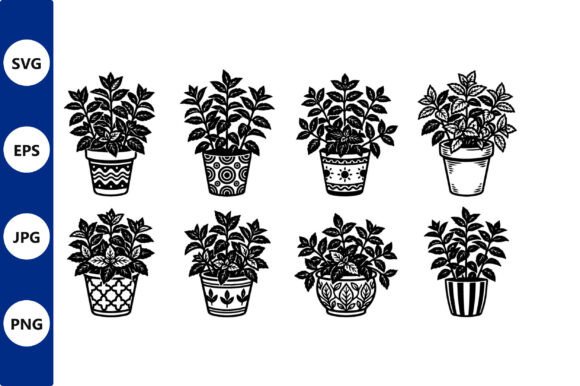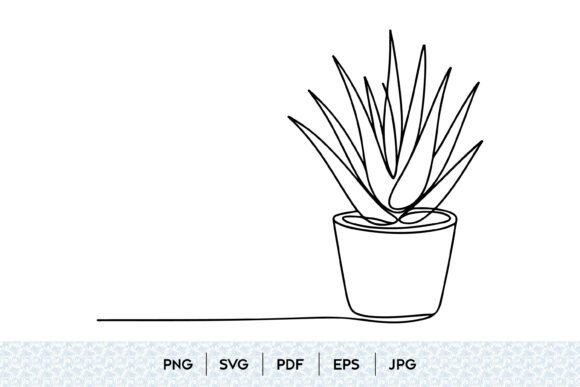
Potted Aloe Vera Line Art SVG: A Practical Guide to Choosing the Right Botanical Design
In the realm of digital design and home decor, the Potted Aloe Vera Line Art SVG has emerged as a versatile asset for creators seeking a balance between botanical accuracy and minimalist aesthetics. Unlike complex, full-color illustrations or heavy photographic textures, this specific style relies on clean contours and negative space to define the subject. For adults aged 20 to 50 who are managing personal brands, planning interior renovations, or engaging in DIY crafting projects, understanding the nuances of this format is essential. It is not merely an image file; it is a functional tool that dictates how a design scales, prints, and integrates into various mediums.
When evaluating a Potted Aloe Vera Line Art SVG, one must first appreciate what distinguishes it from other botanical representations. The core value lies in its vector nature. Unlike raster images (such as standard JPEGs or PNGs) which are composed of pixels, an SVG (Scalable Vector Graphics) file is defined by mathematical paths. This means the intricate details of the aloe vera leaves—the serrated edges, the subtle curvature, and the pot's geometry—remain crisp regardless of whether they are printed on a small business card or blown up onto a large vinyl banner. This scalability is the primary differentiator when comparing line art against traditional clipart or stock photography.
Understanding the Distinctive Qualities of Line Art
The aesthetic appeal of a potted plant line art design stems from its reductionism. By stripping away color gradients and shading, the focus shifts entirely to form and structure. This approach aligns perfectly with modern interior design trends that favor "less is more." A minimalist plant illustration of an aloe vera can soften a stark room without overwhelming the visual field. In contrast, a detailed watercolor painting of the same plant might dominate a space or clash with existing patterns.
Furthermore, the line art style offers a unique flexibility for customization. Because the lines are distinct and often separated layers within the vector file, designers can easily manipulate individual elements. One might change the thickness of the stroke to create a bolder statement or thin it out for a delicate, engraving-style look. This level of control is rarely available with pre-rendered botanical printable designs found in fixed formats. The ability to edit the file ensures that the final output can be tailored to specific brand guidelines or personal tastes, making it a superior choice for professional applications where consistency is key.
Comparing Formats: SVG Versus Raster Alternatives
When researching resources for a project, the decision often comes down to file format. While the keyword list includes options like JPG, PNG, and PDF, each serves a different purpose compared to the SVG. Understanding these differences is crucial for avoiding common pitfalls in production.
- SVG vs. PNG: A PNG is excellent for web use where transparency is needed, but it is resolution-dependent. If you enlarge a succulent outline svg converted to PNG, it will eventually pixelate. An SVG remains sharp at any size. However, if your end goal is strictly for a low-resolution social media post where file size matters more than future scalability, a high-quality PNG might suffice.
- SVG vs. JPG: JPG files do not support transparency and compress data, often leading to artifacts around fine lines. For a black and white plant art piece, the loss of edge definition in a JPG can make the design look muddy. SVG is the clear winner for maintaining the integrity of thin lines.
- SVG vs. EPS/PDF: These are also vector formats, similar to SVG. An EPS file is often preferred in professional print shops for offset printing, while PDFs are versatile for both print and screen. The main advantage of SVG is its native compatibility with web browsers and many consumer-grade cutting machines, whereas EPS may require specialized software to open and edit.
For most users, particularly those using tools like Cricut or Silhouette for plant svg for cricut projects, the SVG format is the most practical. It bridges the gap between digital design and physical creation seamlessly. If you are a graphic designer working in Adobe Illustrator, you might prefer the EPS or AI versions included in a comprehensive download package, as they offer advanced editing capabilities not always accessible in basic SVG viewers.
Strengths and Tradeoffs in Design Application
Adopting a Potted Aloe Vera Line Art SVG brings significant strengths, particularly regarding versatility and cost-efficiency. Once purchased or created, a single vector file can be used across multiple products: t-shirts, mugs, wall decals, stationery, and website graphics. This multi-purpose utility reduces the need to commission separate assets for every new application. Additionally, the modern botanical illustration style is timeless; unlike trend-heavy colorful graphics, black ink line drawings tend to age gracefully, remaining relevant in design portfolios for years.
However, there are tradeoffs to consider. The minimalist nature of line art may not suit every context. If a project requires a sense of depth, texture, or organic realism that only color and shading can provide, a line drawing might feel too flat or sterile. For instance, a children's book cover might benefit from the vibrancy of a colored illustration rather than a stark simple plant contour. Similarly, in environments with very busy backgrounds, thin line art can get lost unless the stroke weight is significantly increased, which alters the original aesthetic.
Another consideration is the technical skill required to utilize the file effectively. While the file itself is ready to use, getting the best results often requires familiarity with vector editing software. Users unfamiliar with tools like Adobe Illustrator, Inkscape, or even the proprietary software for cutting machines might find the process of ungrouping layers or adjusting node points challenging. In such cases, a pre-assembled houseplant clipart in a raster format might be easier to implement quickly, albeit with lower quality potential.
Decision Factors: When to Choose Line Art
Determining whether a Potted Aloe Vera Line Art SVG is the right choice depends heavily on the intended outcome. It is the ideal solution when scalability is a priority. If you plan to produce merchandise ranging from small stickers to large banners, the vector format ensures consistent quality. It is also the preferred option for laser engraving and vinyl cutting, where the machine needs to follow distinct paths rather than interpret pixel density.
Consider the following scenarios where this format excels:
- DIY Home Decor: Creating custom wall art or decals for a living room or office. The elegant succulent artwork adds a touch of sophistication without requiring a painter's eye.
- Brand Identity: Developing logos or icons for wellness brands, spas, or eco-friendly businesses. The nature inspired svg conveys growth and purity effectively.
- Print-on-Demand: Uploading designs to platforms that sell apparel or home goods. Vector files ensure that the print quality meets professional standards.
- Wedding and Event Stationery: Designing invitations or place cards where a clean, modern houseplant illustration complements a minimalist theme.
Conversely, you may need to look for alternatives if your project demands photorealism or complex texturing. If you are designing a packaging label that needs to show the fleshy texture of the aloe leaf to emphasize freshness, a line drawing might fail to communicate that sensory detail. In such cases, a high-resolution photograph or a detailed digital painting would be more appropriate. Similarly, if you lack the hardware to cut vinyl or the software to edit vectors, investing in a complex SVG file might be unnecessary; a simple printable botanical svg converted to a PDF for direct printing might be more efficient.
Maximizing Value with Multi-Format Downloads
Many high-quality resources now offer the Potted Aloe Vera Line Art SVG alongside other formats like PNG, EPS, and JPG. This bundling strategy addresses the varied needs of different users. For the hobbyist who just wants to print a quick image, the JPG or PNG provides immediate gratification. For the professional needing to integrate the design into a larger layout, the EPS or AI file offers the necessary flexibility.
When evaluating these bundles, look for the completeness of the set. A robust package should include the layered vector file (for editing), a flattened version (for easy use), and high-resolution raster versions (for web or print). This variety ensures that you are not locked into a single workflow. It allows you to experiment with decorative houseplant vector concepts without being hindered by format limitations.
Ultimately, the choice of a Potted Aloe Vera Line Art SVG is a strategic decision based on your specific goals. It offers a blend of artistic elegance and technical utility that few other design assets can match. By weighing the benefits of scalability and customization against the potential limitations of a minimalist style, you can determine if this resource fits your project requirements. Whether you are creating indoor botanical decor for your own home or developing assets for a commercial venture, understanding the capabilities of this format empowers you to make informed, effective design choices.