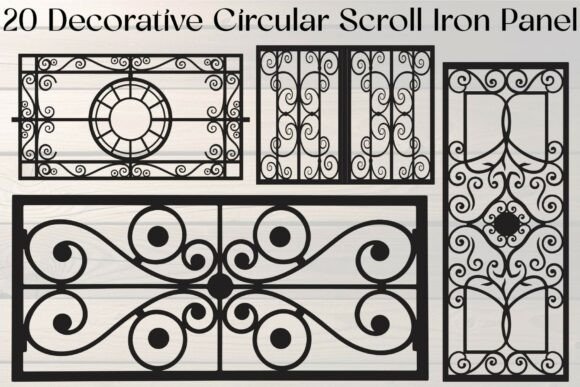
Decorative Circular Scroll Iron Panel
Metalwork has always been a dance between structural necessity and artistic expression. When you introduce a Decorative Circular Scroll Iron Panel into your design workflow, you are not just adding a piece of metal; you are injecting a focal point that commands attention through balanced symmetry and flowing elegance. This specific aesthetic relies on the timeless interplay between the rigid geometry of a circle and the organic, fluid motion of scrollwork. For creators ranging from professional fabricators to hobbyist designers, this style offers a versatile foundation for projects that demand both durability and sophistication.
The appeal of these designs lies in their adaptability. Whether you are crafting a grand entrance gate or a subtle interior room divider, the circular medallion pattern serves as an anchor. It draws the eye inward, creating a sense of completeness and harmony. Unlike linear patterns that can sometimes feel repetitive or monotonous, the radial nature of a circular scroll panel introduces dynamic movement. The curves guide the viewer's gaze around the center, revealing intricate details with every angle of observation. This makes them particularly effective for architectural elements where light and shadow play a crucial role in the final visual impact.
Understanding the Design Language of Circular Scrolls
To truly leverage the potential of a Decorative Circular Scroll Iron Panel, it is essential to understand what makes these compositions work. At their core, these designs are built on principles of symmetry and proportion. The circular boundary provides a defined frame, while the internal scrollwork fills the space without overwhelming it. This balance is critical in metal fabrication, where too much density can make a piece look heavy and obscure visibility, while too little can appear flimsy or unfinished.
The "scroll" element itself is derived from classical wrought iron traditions, mimicking the natural curves of vines and acanthus leaves. However, when rendered in modern vector formats for CNC plasma or laser cutting, these scrolls gain a precision that hand-forging struggles to achieve consistently. The result is a clean, crisp line quality that enhances the perceived luxury of the material. When you combine these ornamental details with the geometric stability of a round medallion, you create a visual rhythm that feels both traditional and contemporary. This duality allows the designs to fit seamlessly into historic renovations as well as modern luxury estates.
Practical Applications for Metal Fabrication Projects
The versatility of this bundle extends far beyond simple decoration. These panels are engineered to serve functional roles in various construction and design scenarios. One of the most common applications is in iron gate panels. A large entryway gate featuring a central circular scroll motif immediately elevates the curb appeal of a property. It signals security without sacrificing beauty, offering a welcoming yet imposing presence.
Beyond gates, consider the application in balcony railing designs. Traditional railings often rely on vertical bars, which can feel utilitarian. By integrating a decorative circular scroll iron panel into the railing system, you break up the monotony of vertical lines. This adds visual interest at eye level, making outdoor spaces feel more curated and inviting. Similarly, for fence grill fabrication, these panels can be used as repeating modules or as standalone accent pieces within a larger fence structure. They provide privacy where needed while allowing light and air to pass through the open scrollwork.
Interior applications are equally compelling. Architectural wall panels featuring these designs can act as dramatic backdrops for fireplaces, reception desks, or headboards. The transparency of the scrollwork ensures that the wall behind remains visible, maintaining a sense of openness even when the surface is covered. Additionally, decorative metal screens made from these patterns are excellent for defining spaces within open-concept living areas without building solid walls. They offer a soft separation that maintains sightlines and flow.
Optimizing Your Workflow with High-Quality Vector Files
For the modern fabricator or designer, the quality of the digital file is just as important as the physical execution. The 20 Decorative Circular Scroll Iron Panel Bundle addresses this by providing files in multiple high-resolution formats: EPS, SVG, PNG, PDF, and JPG. This variety ensures compatibility across the entire production pipeline, from initial design visualization to final cutting.
When working with CNC machines, plasma cutters, or laser cutters, vector formats like EPS and SVG are indispensable. These files contain mathematical paths rather than pixels, meaning they remain perfectly sharp regardless of how large you scale the design. This scalability is crucial when you need to adjust a standard panel size to fit a custom opening. You can enlarge a small medallion to fill a massive gate or shrink a complex scroll pattern for a delicate jewelry box lid without losing any detail.
Software compatibility is another key factor. Whether you use industry standards like Adobe Illustrator and CorelDRAW or open-source tools like Inkscape, these files are optimized for precise editing. You can easily modify individual scroll arms, adjust the thickness of the lines to match your specific torch or laser settings, or combine multiple panels to create unique, larger compositions. The inclusion of transparent background PNGs and high-res JPGs also facilitates quick client presentations, allowing you to visualize how the metal will look against different textures and lighting conditions before cutting a single piece of steel.
Tips for Consistent and Professional Results
- Scale Appropriately: While vectors are scalable, ensure the scroll details remain thick enough to withstand the heat of plasma cutting or the kerf of a laser. Extremely thin lines may melt away or become fragile during installation.
- Consider Material Thickness: Adjust your design parameters based on whether you are using sheet metal or bar stock. Thicker materials may require slightly wider gaps in the scrollwork to prevent warping during thermal expansion.
- Test Before Cutting: Always run a test cut on scrap material to verify that the vector paths translate correctly to your machine's software. Check for any unintended closed loops or stray points that could cause errors.
- Finish Matters: The intricate curves of a circular scroll panel highlight the finish of the metal. Whether you choose powder coating, patina, or raw black oxide, ensure the surface preparation is thorough to let the design shine.
Adapting Designs for Different Audiences and Styles
One of the greatest strengths of the Decorative Circular Scroll Iron Panel collection is its ability to bridge stylistic gaps. For clients seeking a traditional look, the classic wrought iron compositions evoke a sense of heritage and craftsmanship. These designs pair beautifully with brick, stone, and wood, reinforcing a timeless aesthetic.
Conversely, for those aiming for a modern luxury project, the same panels can be reimagined. By using sleeker finishes like brushed stainless steel or matte black powder coat, the ornate scrollwork takes on a contemporary edge. The contrast between the complex, organic shapes and the minimalist, industrial setting creates a striking juxtaposition that is highly sought after in modern architecture. Designers can also experiment with variations, such as offsetting the circles or layering multiple panels at different depths to create a three-dimensional effect.
Small business owners and freelancers can utilize these files to expand their service offerings without investing hours in original design work. By having a library of 100 total files (including 20 distinct designs in five formats each), you can quickly prototype ideas for clients, reducing turnaround time and increasing efficiency. Educators and hobbyists also benefit from these resources, as they provide a structured way to learn about vector manipulation, metalworking techniques, and design theory.
Ultimately, the goal is to create work that resonates with the end user. Whether you are fabricating a custom ornamental metal project for a corporate lobby or a decorative screen for a home office, the underlying principle remains the same: use the inherent beauty of the circular scroll to enhance the environment. By combining high-quality digital assets with skilled execution, you transform raw metal into art that stands the test of time. The balance of bold symmetry and elegant curves ensures that your projects are not only functional but also memorable, leaving a lasting impression on everyone who encounters them.