Traditional Archways Illustrating East Asian Design
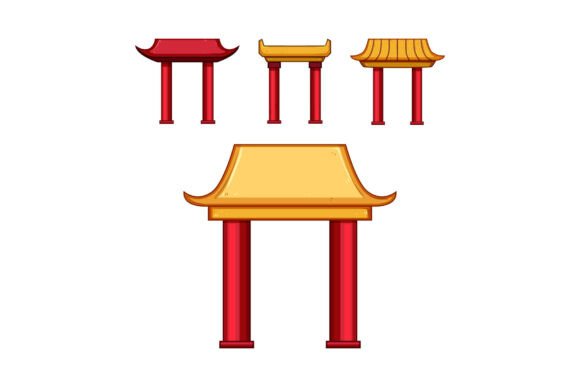
In the realm of digital design, few motifs carry as much immediate cultural weight and visual appeal as the traditional archway. These structures, often characterized by red pillars and curved golden or red roofs, serve as more than just architectural representations; they are powerful symbols of heritage, celebration, and welcome. When stylized as isolated vector icons, Traditional Archways Illustrating East Asian aesthetics become versatile tools for creators seeking to infuse their projects with a sense of history and elegance. Whether you are designing a festival invitation, branding a tea house, or creating assets for a mobile game, these icons offer a direct line to a rich visual language that resonates across global audiences.
The Visual Language of the Eastern Archway
To effectively utilize these designs, one must first understand what makes them distinct. The traditional archway, known variously as a pailou in China or a kōmon in Japan, is defined by its structural harmony and symbolic color palette. The deep reds represent good fortune and joy, while the gold accents on the curved roofs signify prosperity and wisdom. The sweeping curves of the rooflines create a dynamic tension against the vertical stability of the pillars, resulting in a shape that is both grounded and uplifting.
When converted into vector formats, these elements retain their clarity at any scale. This scalability is crucial for modern design workflows where an asset might need to appear as a tiny favicon on a browser tab or as a massive backdrop for a trade show booth. The isolation of the icon removes distracting background noise, allowing the intricate details of the roof tiles and the boldness of the pillars to stand out. For designers, this means Traditional Archways Illustrating East Asian culture can be integrated seamlessly into complex layouts without clashing with other typographic or graphical elements.
Creative Applications for Modern Projects
The versatility of these archway icons extends far beyond simple decoration. They function as narrative devices that instantly set a scene or context. Consider the following practical applications where these assets shine:
- Event Branding and Invitations: For Lunar New Year celebrations, weddings, or cultural festivals, an archway icon serves as a perfect header or frame. It signals to the recipient that the event is steeped in tradition and hospitality. A red and gold archway on a digital invite immediately establishes a festive tone before a single word is read.
- Web and App UI Elements: In user interface design, these icons can act as section dividers, navigation buttons, or loading animations. Imagine a travel app focused on Asian tourism using a subtle archway silhouette as a "destination" marker. It provides a thematic consistency that generic location pins cannot achieve.
- Product Packaging: Small business owners selling artisanal goods like teas, spices, or ceramics can use these vectors on labels and boxes. The archway suggests authenticity and quality, implying that the product inside has been curated with care and respect for tradition.
- Educational Materials: Educators and content creators can use simplified versions of these icons to illustrate geography, history, or cultural studies. They provide a visual anchor for students learning about architectural styles and cultural symbolism.
Adapting Styles for Different Audiences
While the core structure remains consistent, the execution of Traditional Archways Illustrating East Asian themes should vary based on the target audience and platform. A flat, minimalist vector might suit a tech startup looking to incorporate cultural motifs into a clean, modern brand identity. Conversely, a highly detailed illustration with gradients and texture overlays might be better suited for a luxury hotel's promotional material or a high-end restaurant menu.
Designers should also consider the color psychology involved. While red and gold are traditional, adapting the palette can change the message entirely. Using muted earth tones or monochromatic schemes can make the icon feel more contemporary and less cliché, appealing to a younger demographic that values subtlety over ostentation. For instance, a fashion brand might opt for a sleek black and white archway to convey sophistication, whereas a children's educational app would benefit from bright, saturated colors to capture attention.
Practical Guidelines for Implementation
Integrating these cultural symbols requires a balance of creativity and respect. To ensure your design is effective and appropriate, follow these practical recommendations:
- Maintain Proportional Integrity: Even when simplifying an archway into an icon, preserve the essential ratio between the pillars and the roof. Distorting these proportions too much can make the symbol unrecognizable or unintentionally comical.
- Ensure Accessibility: When using red and gold, be mindful of color contrast ratios for users with visual impairments. If the background is dark, consider adjusting the gold to a brighter yellow or adding outlines to ensure the icon remains legible.
- Avoid Cultural Stereotypes: Use the archway as a symbol of specific traditions rather than a blanket representation of all Asian cultures. Research the specific origin of the style you are using—whether it is Chinese, Japanese, Korean, or Vietnamese—to ensure accuracy in your storytelling.
- Keep File Sizes Optimized: Since these are vector icons, take advantage of SVG formats for web use. This ensures crisp edges on high-resolution screens while keeping load times fast, which is critical for user experience.
Enhancing Consistency Across Platforms
For entrepreneurs and marketers managing multiple channels, consistency is key. An archway icon used on social media should feel like part of the same family as the one on the company website. Create a style guide that defines how the icon interacts with your typography and other brand colors. Does the archway always sit above the text? Is it always centered? Establishing these rules prevents the design from feeling disjointed.
Furthermore, consider how the icon behaves in motion. In video content or animated web banners, a static archway can be brought to life with subtle movements. Perhaps lanterns swing gently from the eaves, or light pulses along the roofline. These small animations add a layer of engagement without overwhelming the viewer, making the Traditional Archways Illustrating East Asian motif feel alive and interactive.
Conclusion: Bridging Tradition and Innovation
The power of the traditional archway lies in its ability to bridge the past and present. As isolated vector icons, they offer a lightweight yet profound way to communicate cultural depth in a digital-first world. By understanding their historical significance and adapting their visual presentation to fit modern contexts, creators can produce work that is not only aesthetically pleasing but also culturally resonant.
Whether you are a freelancer crafting a unique logo, a marketer launching a seasonal campaign, or an educator building a lesson plan, these archways provide a solid foundation for creative expression. They remind us that even in the most abstract digital spaces, there is room for the warmth, structure, and beauty of traditional architecture. Embrace these symbols with intention, and let them guide your audience through a journey of discovery and appreciation.