Revitalizing the Roaring Twenties: The Strategic Power of Art Deco Black Corner Border Elements
In the rapidly evolving landscape of digital and print design, few aesthetic movements have demonstrated the enduring resilience of Art Deco. Once the visual language of the 1920s and 30s, characterized by opulence, symmetry, and geometric precision, this style has undergone a modern renaissance. At the forefront of this resurgence are Art Deco Black Corner Border Elements, a specific set of design assets that bridge the gap between historical grandeur and contemporary minimalism. For professionals, creators, and entrepreneurs, understanding the utility and impact of these elements is no longer just an artistic preference; it is a strategic asset in building brand identity.
The market for high-quality vector graphics is saturated with generic templates, yet there remains a distinct demand for resources that offer both sophistication and versatility. This article explores why these specific black corner border elements are capturing the attention of marketers and designers alike, how they fit into broader creative workflows, and why their technical specifications make them indispensable for modern production environments.
The Anatomy of a Timeless Aesthetic
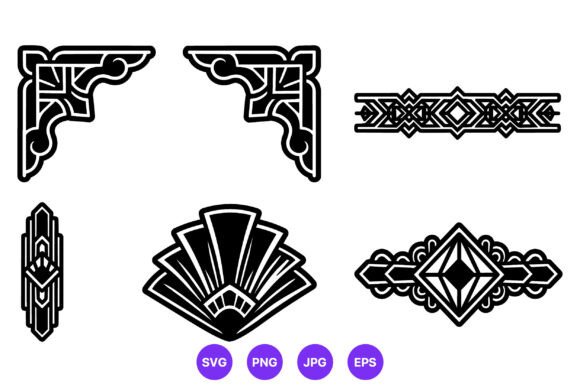
To understand the value of these assets, one must first appreciate what defines them. Art Deco Black Corner Border Elements are not merely decorative lines; they are complex compositions rooted in the principles of the Art Deco movement. These designs rely heavily on strong vertical and horizontal lines, stepped forms, and radiating sunburst patterns. When rendered in high-contrast black against a white or light background, the result is a visual statement that commands authority and elegance.
Unlike the fluid, organic curves of Art Nouveau that preceded it, Art Deco is defined by its rigidity and mathematical order. The corner borders within this collection utilize this geometry to frame content without overwhelming it. They serve as architectural anchors for text, images, and logos, providing a sense of structure and containment. In a digital age where screens often feel chaotic and unstructured, these symmetrical shapes offer a psychological sense of stability and premium quality.
The "black" aspect of these elements is equally significant. High-contrast monochrome is a staple of modern luxury branding. It strips away the distraction of color, forcing the viewer to focus on the form and the message. Whether used on a wedding invitation, a corporate annual report, or a website header, the starkness of the black vector lines ensures legibility and impact across various media.
Bridging Historical Trends and Modern Workflows
The relevance of Art Deco in today's market cannot be overstated. We are currently witnessing a cyclical trend in consumer preferences where nostalgia meets futurism. From the architecture of new skyscrapers to the packaging of luxury cosmetics, the clean lines and bold geometry of the 1920s are being reinterpreted for the 2020s. Professionals who integrate Art Deco Black Corner Border Elements into their work are tapping into this cultural zeitgeist, signaling to their audience that their brand values heritage, craftsmanship, and timeless style.
However, the adoption of this style is driven by more than just aesthetics; it is also a response to changing technological needs. Modern design workflows require assets that are scalable, editable, and format-agnostic. The traditional method of creating these intricate borders from scratch using pen tools is time-consuming and prone to errors in symmetry. This is where the availability of pre-designed, high-quality vector sets becomes a critical productivity tool.
Freelancers and marketing agencies operate under tight deadlines. The ability to instantly access a library of ornamental shapes that can be dropped into a layout saves hours of manual drafting. Furthermore, because these elements are designed with vector technology at their core, they maintain perfect fidelity whether scaled down for a mobile app icon or blown up for a billboard. This scalability addresses a fundamental pain point in the industry: the need for assets that perform flawlessly across all touchpoints of a customer journey.
Why Vector Technology Matters
The technical specification of these assets is as important as their visual appeal. The inclusion of SVG, PNG, JPG, and EPS files in the download package ensures maximum compatibility. For web developers, SVG (Scalable Vector Graphics) is the gold standard. It allows for crisp rendering on any screen resolution, including Retina displays, without the file bloat associated with raster images. Moreover, SVG code can be manipulated via CSS, allowing for dynamic interactions like hover effects or color changes without needing to create multiple image versions.
For print designers and pre-press specialists, the EPS (Encapsulated PostScript) format is essential. It ensures that the geometric patterns and symmetry remain mathematically precise during the printing process, preventing the pixelation or blurring that can occur with lower-resolution files. The fact that the artwork is 100% vector means that every curve and angle is defined by mathematical equations rather than pixels. This guarantees that the high-contrast black lines remain sharp and clean, regardless of the output medium.
- SVG: Ideal for responsive web design and UI/UX projects requiring lightweight, scalable graphics.
- EPS: The industry standard for professional print production, ensuring perfect scaling for large formats.
- PNG & JPG: Raster options for quick previews, social media thumbnails, or legacy software compatibility.
Practical Applications in Contemporary Business
The versatility of Art Deco Black Corner Border Elements extends far beyond simple decoration. They serve functional roles in communication design that enhance readability and hierarchy. Consider the following practical applications where these assets add tangible value:
- Luxury Branding and Packaging: In the competitive world of consumer goods, packaging is the primary salesperson. Using these border elements to frame product names or ingredient lists elevates the perceived value of the item. The geometric symmetry suggests precision manufacturing and attention to detail, traits that consumers associate with premium products.
- Digital Event Invitations: Weddings, galas, and corporate conferences often seek a theme that feels exclusive. These black corner borders provide a classic frame for event details, creating a formal atmosphere that resonates with attendees. Their high contrast ensures that crucial information stands out clearly against varied backgrounds.
- Editorial and Publication Layouts: Magazines and e-books frequently use ornamental corners to separate chapters, highlight pull quotes, or frame author bios. The Art Deco style adds a layer of intellectual sophistication to the text, making the reading experience feel curated and refined.
- Web Interface Design: In a sea of flat, minimalist interfaces, subtle Art Deco accents can differentiate a brand. Placing these corner elements behind a navigation menu or around a hero image creates depth and character without cluttering the user interface.
Meeting the Evolving Expectations of Creators
The expectations of modern creators and entrepreneurs have shifted significantly. There is a growing intolerance for low-fidelity assets that compromise the final output. Clients and stakeholders now demand deliverables that are not only visually striking but also technically robust. The rise of remote collaboration and cloud-based design tools has further accelerated the need for standardized, universally compatible file formats.
When a designer downloads a ZIP folder containing a comprehensive set of Art Deco Black Corner Border Elements, they are acquiring a toolkit that reduces friction in the creative process. The variety of included formats means that the asset can be handed off to different team members—developers, printers, social media managers—without the need for conversion or re-rendering. This interoperability streamlines the workflow, reducing bottlenecks and ensuring that the vision remains consistent from concept to execution.
Furthermore, the emphasis on symmetry and geometric patterns aligns with current trends in data visualization and infographics. As businesses strive to present complex information in digestible ways, structured frames help organize data points, making charts and statistics easier to read. The rigid structure of Art Deco provides a natural container for information, guiding the eye logically through the content.
The Future of Ornamental Design
Looking forward, the integration of historical styles into digital ecosystems will likely continue to grow. As artificial intelligence and automation take over more routine aspects of graphic creation, the human element of curation and stylistic choice becomes even more valuable. Assets like these Art Deco Black Corner Border Elements represent a curated selection of history that has been optimized for the future. They allow creators to inject personality and narrative into their work without sacrificing efficiency.
The shift towards high-contrast, vector-based design is also a response to the increasing diversity of display technologies. From OLED screens to variable-data printing, the ability to render sharp, distinct lines is paramount. The black-and-white palette of these elements ensures they adapt seamlessly to dark mode interfaces, which are becoming increasingly popular in consumer software, while maintaining their impact in traditional print.
Ultimately, the value of these design elements lies in their ability to communicate status and stability. In a volatile market, brands that project confidence and heritage stand out. By leveraging the power of Art Deco geometry, professionals can craft visuals that resonate with audiences seeking quality and distinction. The availability of these assets in a complete, multi-format package empowers creators to execute their visions with speed and precision, turning a historical aesthetic into a modern business advantage.
As we move deeper into an era where digital presence defines success, the tools we use to build that presence must be as sophisticated as the messages we convey. Art Deco Black Corner Border Elements offer exactly that—a fusion of timeless artistry and cutting-edge technology, ready to elevate the next generation of creative work.