Old Traditional Paper Scrolls for Documents: A Practical Evaluation of Form and Function
The resurgence of interest in analog archival methods has brought Old Traditional Paper Scrolls for Docume into the modern spotlight. These artifacts, characterized by long sheets of high-quality paper mounted on decorative red or golden wooden rods, offer a distinct aesthetic and functional alternative to standard binding formats. For adults seeking unique presentation methods for artwork, calligraphy, or historical documentation, understanding the specific utility and limitations of these scrolls is essential before committing to this format.
Unlike modern documents bound with glue, staples, or spiral wire, traditional scrolls rely on a tension-based system where the document is rolled around a primary rod at the bottom and secured by a secondary rod at the top. This design creates a self-contained unit that protects the central content from dust and light when stored. The presence of blank paper sections within the scroll allows for continuous text, intricate artwork, or ancient-style writings without the interruption of page turns. However, the decision to utilize Old Traditional Paper Scrolls for Docume requires a balanced assessment of how they compare to contemporary alternatives in terms of accessibility, preservation, and visual impact.
Defining the Distinctive Features of Traditional Scroll Formats
To evaluate the suitability of this format, one must first understand its construction and inherent characteristics. Old Traditional Paper Scrolls for Docume are not merely rolled paper; they are engineered for durability and ceremonial presentation. The core components include the writing surface, typically made from rice paper, mulberry bark paper, or high-grade cotton rag, which offers superior longevity compared to standard wood-pulp paper.
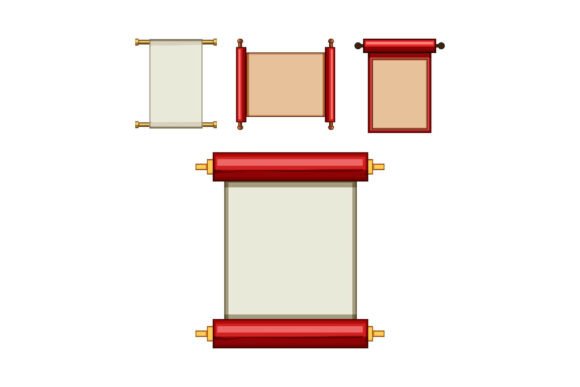
The defining mechanical feature is the use of wooden rods. The lower rod, often thicker and more ornate, serves as the axis for rolling. It is frequently finished in deep red lacquer or gilded with gold leaf, providing a striking visual anchor. The upper rod is usually thinner and acts as a handle for unrolling. This dual-rod system ensures that the paper remains taut when displayed but can be compactly stored when not in use. The blank paper areas are strategically placed to allow for expansive compositions, such as panoramic landscapes or continuous narrative texts, which would be fragmented if forced onto individual pages.
This format distinguishes itself through its tactile experience. Unrolling a scroll is a deliberate action that commands attention, transforming the act of reading or viewing into a ritualistic event. This contrasts sharply with the passive consumption of digital screens or the quick flipping of book pages. For documents intended to convey authority, heritage, or artistic significance, the physical presence of Old Traditional Paper Scrolls for Docume adds a layer of gravitas that few other mediums can replicate.
Comparative Analysis: Scrolls Versus Modern Binding Methods
When comparing Old Traditional Paper Scrolls for Docume to standard alternatives like hardcover books, ring binders, or digital files, significant trade-offs emerge regarding accessibility and storage. The most immediate advantage of the scroll is its space efficiency during storage. A scroll containing hundreds of feet of text occupies a fraction of the shelf space required by a multi-volume set of books covering the same content. Furthermore, the protective nature of the rolled state shields the paper from environmental degradation better than an open book left on a shelf.
However, the trade-off lies in information retrieval. In a book or a binder, a reader can instantly flip to a specific chapter or page. With a scroll, accessing a specific section requires manually unrolling the document, potentially disturbing the rest of the content. This makes Old Traditional Paper Scrolls for Docume less suitable for reference materials that require frequent, random access. If the primary goal is rapid data lookup, a paginated format or a digital database remains the superior choice.
- Accessibility: Books and binders allow instant navigation; scrolls require linear progression.
- Durability: Scrolls protect the entire sheet from edge wear, whereas books suffer from spine cracking and corner damage over time.
- Aesthetics: Scrolls offer a unique, ceremonial display quality; books provide a standardized, professional look.
- Portability: Short scrolls are highly portable, but very long scrolls can become cumbersome to transport without specialized cases.
Digital formats present another stark contrast. While digital files offer infinite searchability and zero physical footprint, they lack the tangible connection and permanence associated with physical media. Old Traditional Paper Scrolls for Docume serve as a permanent record independent of technology, power sources, or file corruption risks. For individuals valuing long-term archival security without reliance on cloud infrastructure, the physical scroll offers a robust, albeit labor-intensive, solution.
Evaluating Strengths and Limitations for Specific Use Cases
The decision to adopt Old Traditional Paper Scrolls for Docume should be driven by the specific intent of the document. This format excels in scenarios where the presentation is as important as the content. For instance, artists creating large-scale ink wash paintings or calligraphers composing continuous poetic verses find the uninterrupted surface of a scroll indispensable. The ability to stretch a composition across several meters allows for dynamic flow and scale that is impossible to achieve on fixed-size paper.
In a corporate or legal context, the utility shifts toward ceremonial recognition. Certificates of achievement, historical charters, or commemorative declarations benefit from the dignity conferred by the red and golden wooden rods. The visual weight of the scroll signals importance and tradition, making it an excellent choice for awards or official proclamations intended for framing or display rather than daily administrative use.
Conversely, there are clear situations where this format is ill-suited. Educational textbooks, technical manuals, and working drafts require frequent annotation, referencing, and updating. The rigid structure of a scroll makes adding marginalia difficult without damaging the paper, and the inability to easily fold back to previous sections hinders active study. Additionally, the cost of producing high-quality Old Traditional Paper Scrolls for Docume is generally higher than printing standard documents. The materials—handmade paper, lacquered wood, and gold leaf—represent a premium investment that may not be justified for transient or disposable information.
Another limitation involves the environment. While the rolled state protects against light, the paper used in traditional scrolls is often sensitive to humidity fluctuations. Unlike acid-free archival boxes designed for loose papers, scrolls must be kept in stable conditions to prevent warping or mold growth between the layers. Users must consider their storage capabilities before investing in this format.
Decision Factors for Choosing the Right Format
Before selecting Old Traditional Paper Scrolls for Docume, potential users should evaluate three critical factors: frequency of access, intended lifespan, and display requirements. If the document will be viewed occasionally for its aesthetic or symbolic value, the scroll is an ideal candidate. If the document needs to be consulted daily for specific details, a paginated book or digital file is more practical.
Consider also the nature of the content. Linear narratives, panoramic art, and continuous scripts align perfectly with the scroll's geometry. Fragmented data, tables, and cross-referenced information do not. Finally, assess the budget and maintenance commitment. The initial cost is higher, and the need for careful handling and climate-controlled storage adds ongoing responsibilities.
Practical Applications and Real-World Examples
To illustrate the versatility of this format, consider the application in family history projects. Many genealogists choose to create Old Traditional Paper Scrolls for Docume to map out extensive family trees. The long, continuous format allows for a chronological timeline that spans generations without breaking the visual flow, offering a compelling centerpiece for family gatherings. Similarly, in the realm of interior design, custom scrolls featuring original photography or commissioned poetry serve as unique wall art that can be retracted when not on display, preserving the image from fading.
In educational settings, history teachers might use replica scrolls to demonstrate ancient writing techniques or to present primary source documents in a way that mimics their original context. This tactile approach helps students connect with history on a deeper level than reading a textbook reproduction. However, for the same classroom setting, a workbook for student exercises would remain impractical in scroll form due to the need for frequent turning and writing.
Ultimately, Old Traditional Paper Scrolls for Docume represent a niche but powerful tool in the broader landscape of document management and artistic expression. They bridge the gap between functional record-keeping and ceremonial art. By carefully weighing the trade-offs between accessibility and preservation, users can determine if the distinctive qualities of the scroll align with their specific goals. For those prioritizing longevity, visual impact, and a connection to tradition, the scroll remains an unmatched option. For those needing speed, flexibility, and low-cost reproduction, modern alternatives continue to hold the advantage.