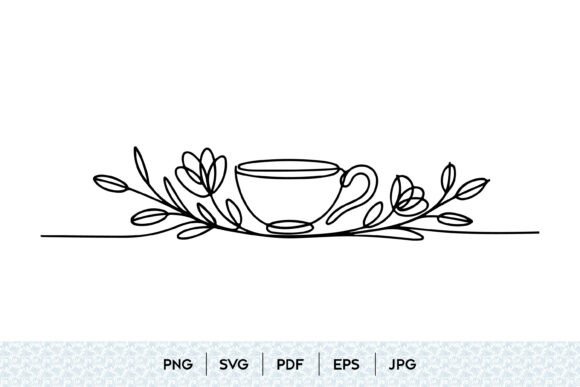
Floral Tea Cup One Line Art Border: Elevating Design with Continuous Lines
In an era where digital noise often overwhelms visual communication, the Floral Tea Cup One Line Art Border stands out as a testament to the power of simplicity. This design style merges the comforting imagery of a steaming cup with the organic flow of botanical elements, all rendered through a single, unbroken stroke. It is not merely a decorative clipart; it is a sophisticated visual language that speaks to elegance, mindfulness, and modern minimalism. For professionals ranging from graphic designers to boutique business owners, this aesthetic offers a versatile tool to convey warmth and sophistication without clutter.
The appeal of continuous line art lies in its fluidity. Unlike traditional illustrations that rely on heavy shading or complex layering, one-line drawings capture the essence of a subject through economy of motion. When applied to a tea cup surrounded by blossoms and leaves, the result is a seamless integration of function and nature. This specific motif has gained traction because it resonates with a growing cultural desire for "slow living" and mindful consumption. Whether used as a logo for a wellness brand or a border for a wedding invitation, the Floral Tea Cup One Line Art Border provides a cohesive look that feels both hand-drawn and professionally polished.
The Evolution of Minimalist Botanical Illustration
Design trends have always oscillated between maximalism and minimalism, but the current landscape favors a refined simplicity that retains human character. The rise of the one-line art style is a direct response to the saturation of hyper-realistic and overly complex graphics. As audiences become more visually literate, they appreciate designs that require less cognitive load to process. A continuous line drawing invites the viewer's eye to follow the path, creating a subtle interaction between the image and the observer.
Historically, botanical illustrations were dense and scientific, filled with intricate details meant for identification. Today, the focus has shifted toward abstraction and mood. The floral tea cup motif exemplifies this shift. It strips away the unnecessary textures of ceramic and steam, focusing instead on the silhouette and the relationship between the object and its environment. The surrounding flowers and branches are not just fillers; they frame the cup, suggesting a narrative of relaxation and connection to nature. This evolution reflects a broader market preference for aesthetics that feel authentic and grounded rather than manufactured.
Furthermore, the monochrome nature of these black-and-white vectors ensures longevity. While color palettes change with every season, the stark contrast of a line drawing remains timeless. This adaptability makes the Floral Tea Cup One Line Art Border a strategic asset for brands looking to establish a visual identity that can endure beyond fleeting trends. It allows for easy integration into various contexts, from high-end packaging to casual social media posts, without losing its core impact.
Technical Versatility Across Digital and Print Media
One of the most significant advantages of acquiring a high-quality Floral Tea Cup One Line Art Border is the breadth of file formats provided. In professional workflows, flexibility is paramount. A single asset must often serve multiple purposes, from a small favicon on a website to a large-scale banner in a coffee shop. The inclusion of vector formats like SVG and EPS ensures that the artwork remains crisp at any scale. Vectors are mathematically defined, meaning they do not pixelate when enlarged, which is crucial for print applications such as menus, signage, or product packaging.
For digital creators, the PNG 300 ppi files offer immediate usability. High-resolution raster images are essential for maintaining clarity on high-density screens and for print-on-demand services that require specific DPI standards. The transparency inherent in PNG files allows designers to overlay the floral border onto various backgrounds—be it a textured paper effect for a blog post or a solid color block for a mobile app interface—without awkward white boxes disrupting the composition.
Additionally, the availability of JPG and PDF formats caters to different software ecosystems. PDFs are ideal for sharing proofs with clients or preparing files for professional printing presses, while JPGs remain the standard for email attachments and web galleries. This comprehensive package eliminates the need for time-consuming conversions or quality loss during resizing. For freelancers and entrepreneurs who may not have access to expensive design suites, having a ready-to-use set of formats streamlines the production process significantly.
Practical Applications for Modern Businesses
- Cafe and Restaurant Branding: Coffee shops and tea lounges can utilize the tea cup illustration as a central logo element or as a repeating pattern on napkins and cups. The cozy aesthetic reinforces the brand's promise of a warm, inviting atmosphere.
- Wellness and Lifestyle Products: Brands selling herbal teas, candles, or skincare products often lean into natural themes. A botanical border featuring leaves and blossoms aligns perfectly with values of purity and self-care.
- Event Stationery: Wedding invitations, baby shower cards, and party favors benefit from the elegant simplicity of continuous line art. It adds a touch of class without competing with the typography.
- Digital Content Creation: Bloggers and social media managers can use these borders to frame quotes, recipe instructions, or product showcases, creating a consistent visual theme across their platforms.
Integrating Aesthetic Trends into Daily Workflows
The integration of one line art into creative workflows represents a shift toward efficiency and intentionality. In a fast-paced digital environment, designers often face the pressure to produce high volumes of content quickly. Pre-made assets like the Floral Tea Cup One Line Art Border allow for rapid prototyping and iteration. Instead of spending hours sketching a custom illustration from scratch, a creator can download, customize, and deploy a professional-grade graphic in minutes.
This does not diminish creativity; rather, it redirects it. By offloading the technical execution of the illustration, designers can focus on composition, color theory, and overall brand strategy. The hand drawn quality of the line art adds a human touch that automated tools struggle to replicate. In a world increasingly dominated by AI-generated imagery, the distinct imperfections and flowing rhythm of a true continuous line drawing provide a sense of authenticity that consumers crave.
Moreover, the minimalist approach of this art style supports clean UI/UX design principles. In web design, whitespace is a critical element. A simple outline border frames content effectively without overwhelming the user. It guides the eye naturally, enhancing readability and engagement. For educators and content creators, using such clear visuals helps maintain focus on the message rather than distracting with ornate decorations.
Why Continuous Line Art Resonates with Contemporary Audiences
The psychological impact of visual design cannot be overstated. The continuous line technique creates a sense of unity and flow, subconsciously communicating harmony and balance. When viewers encounter a floral border that loops seamlessly around a tea cup, it evokes feelings of completeness and tranquility. This is particularly relevant in the current climate, where stress and information overload are common concerns. Visuals that promote calmness and order are more likely to be retained and shared.
Furthermore, the nature elements incorporated into the design tap into the biophilic design trend. Humans have an innate connection to the natural world, and incorporating botanical motifs like leaves, branches, and blossoms into everyday objects fosters a sense of well-being. Whether it is a kitchen decor print or a restaurant menu, these elements remind us of the outdoors, even in urban settings. The combination of a hot drink—a universal symbol of comfort—with nature creates a powerful emotional anchor.
For business owners, understanding this resonance is key to effective marketing. A logo design that incorporates these elements suggests that the brand values quality, thoughtfulness, and a connection to the customer's lifestyle. It positions the business not just as a seller of goods, but as a curator of experiences. In the competitive markets of coffee shops and wellness retail, such subtle cues can differentiate a brand from its competitors.
Maximizing Value with Multi-Format Assets
Investing in a comprehensive asset pack that includes PNG, JPG, EPS, SVG, and PDF formats is a strategic move for any creative professional. Each format serves a unique purpose in the lifecycle of a design project. The vector files (EPS, SVG) are the backbone for scalability, ensuring that the decorative border looks perfect whether printed on a business card or a billboard. The raster files (PNG, JPG) are the workhorses for quick deployment in digital campaigns and presentations.
The printable nature of these files also opens up opportunities for physical merchandise. Entrepreneurs can easily apply these designs to tote bags, mugs, stationery, and wall art, expanding their revenue streams without needing extensive design skills. The monochrome palette further enhances versatility, allowing the artwork to be recolored to match any brand identity if needed, or kept in classic black and white for a timeless appeal.
Ultimately, the Floral Tea Cup One Line Art Border is more than just a graphic; it is a flexible component of modern visual storytelling. It bridges the gap between artistic expression and practical utility, offering a solution that is both beautiful and functional. As we continue to navigate a digital-first world, the ability to communicate warmth, elegance, and simplicity through design will only become more valuable. By embracing these minimalist yet expressive visuals, creators and businesses can craft narratives that resonate deeply with their audience, fostering connections that go beyond the screen.